
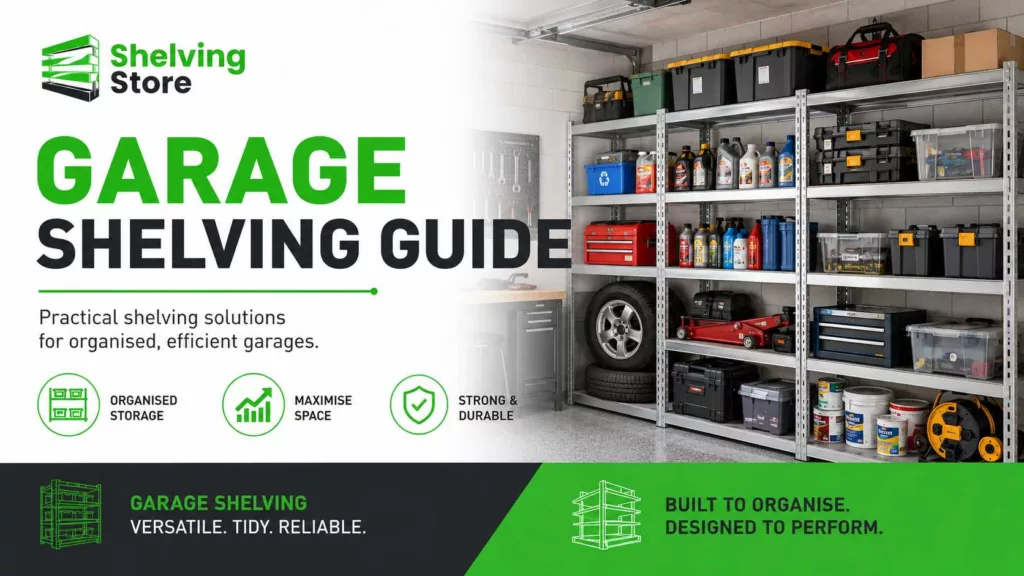
Garage Shelving Guide
A well-organised garage gives you more usable space, protects tools and equipment, and makes everyday items easier to find. However, garage storage can quickly become cluttered because it often needs to accommodate many different products in one room.
This guide explains how to choose garage shelving, calculate the required load capacity, select a suitable shelf depth and create a practical layout that can grow with your storage needs.
Assess Your Garage Storage Needs
Before choosing garage shelving, make a list of everything you need to store. For a broader overview of storage systems, read our How to Choose Shelving guide. Garages often contain a mixture of tools, paint, garden equipment, household supplies, sports gear and bulky storage boxes. Because these items vary in size and weight, one shelf type may not suit every part of the garage.
Sort items into groups and note which products you use often. Frequently used tools should remain easy to reach, while seasonal or seldom-used items can go on upper shelves.
- Tools and workshop equipment
- Plastic storage containers
- Garden and outdoor equipment
- Automotive products
- Paint, cleaning products and household supplies
- Sports and leisure equipment
- Seasonal decorations and camping gear
Planning Tip: Clear the floor before measuring. This makes it easier to see obstructions and decide where shelving can fit without blocking doors, vehicles or walkways.
Measure the Garage Carefully
Measure the available wall length, ceiling height and usable shelf depth. Also check the position of garage doors, windows, plug points, water pipes, workbenches and parking areas.
Depth is especially important. A deep shelving unit stores larger containers, but it may reduce the space available for a vehicle or walking route. In narrow garages, a shallower unit may provide a better balance between storage and access.
- Measure from wall to wall
- Check the height below beams, lights and garage-door tracks
- Allow space for doors and cupboards to open
- Leave a clear route from the house to the garage door
- Confirm that parked vehicles still have enough clearance
Choose the Right Load Capacity
Garage items can become surprisingly heavy. A few toolboxes, containers of fasteners or automotive parts may place a high load on one shelf. Therefore, check the stated capacity of each shelf and the complete unit before ordering.
Manufacturers usually state load capacity as a uniformly distributed load, or UDL. This assumes that the weight spreads evenly across the shelf. A single heavy object placed in the centre creates more stress than several boxes spread across the full width.
- Estimate the weight of the heaviest item.
- Add the weight of all items likely to share one shelf.
- Choose shelving with extra capacity rather than working at the maximum rating.
- Place the heaviest items on lower levels.
Safety Tip: Do not assume that two shelving units with similar dimensions have the same capacity. Frame thickness, shelf material and support design can make a major difference.
Compare Garage Shelving Options
Econo Shelving
Econo shelving is a practical option for general household storage, boxes and lighter garage equipment. It normally combines a steel frame with timber-based shelf decks and offers useful capacity at an affordable price.
Nut and Bolt Shelving
Nut and bolt shelving provides adjustable shelf positions and a durable steel structure. It works well for tools, spare parts, containers and general storeroom use. Galvanised finishes are practical for garages because they require little maintenance.
Heavy-Duty Shelving
Heavy-duty shelving is better for larger equipment, dense stock and demanding workshop applications. For very heavy or bulky stock, compare these requirements with the options covered in our Warehouse Racking Guide. Wider and deeper shelves can store bulky items, while higher load capacities provide a greater safety margin.
Wall Band Shelving
Wall band shelving uses slotted uprights fixed to a suitable wall. It keeps the floor open and can work well above a workbench or in smaller garages. Correct wall fixings and installation are essential.
Pegboards and Louvre Panels
Pegboards and louvre panels organise tools and small parts vertically. They complement shelving by keeping frequently used items visible and easy to reach.
Select the Right Shelf Depth
Choose a depth that supports the stored item without excessive overhang. Small toolboxes and parts containers may only need shallow shelves, while large storage boxes require deeper levels.
- Shallow shelves for small containers, aerosols and frequently used tools
- Medium-depth shelves for archive boxes and general household storage
- Deep shelves for bulky containers, workshop equipment and larger cartons
Before ordering, measure the containers you already own. This prevents wasted space and helps you avoid shelves that are too shallow.
Organise for Easy Access
A good garage layout reduces the time spent searching for items. Group similar products together and give each category a clear home.
- Keep everyday tools between waist and shoulder height
- Store heavy items on lower shelves
- Use labelled bins for small parts
- Place seasonal items on upper levels
- Keep hazardous products out of reach of children and away from heat sources
- Leave frequently used equipment near the front of the garage
Organisation Tip: Use clear labels on shelves and containers. A simple labelling system makes it easier for everyone to return items to the correct place.
Make Better Use of Wall Space
Wall space often provides the greatest opportunity in a cluttered garage. Wall band shelving, pegboards and louvre panels can store smaller items without using valuable floor area.
A workbench area can combine shelving above the bench with tool panels behind it. This keeps the work surface clear while placing tools within easy reach.
Always make sure the wall and fixings can support the expected load. When in doubt, ask a qualified installer for advice.
Plan for Future Expansion
Storage needs usually increase over time. Choose a modular system that allows you to add shelves, bays or accessories later.
Starter and add-on shelving can create longer rows while sharing upright frames. This often reduces the cost of expansion and gives the installation a consistent appearance.
- Leave space at the end of a shelving row
- Choose systems with adjustable shelf positions
- Keep product details for future matching additions
- Allow spare capacity for new tools and equipment
Avoid Common Garage Storage Mistakes
- Buying shelving before measuring the garage
- Choosing the cheapest unit without checking capacity
- Using shelves that are too deep for the available walkway
- Placing heavy equipment on upper shelves
- Blocking plug points, doors or garage-door tracks
- Mixing small parts loosely with larger items
- Failing to allow for future storage growth
A few minutes of planning can prevent expensive changes later. Measure accurately and choose the shelving around the items you actually need to store.
Garage Shelving Checklist
- I have measured the available width, height and depth.
- I know the approximate weight on each shelf.
- The shelving will not obstruct doors, vehicles or walkways.
- The shelf depth suits my storage containers.
- Heavy items can be stored on lower levels.
- The system can expand in future.
- The finish suits the garage environment.
- I have considered wall storage for tools and small parts.
Related product ranges: Garage shelving · Econo shelving · MAX galvanised shelving · Wall band shelving · Pegboards and hooks
Related buying guides: How to Choose Shelving · Office Shelving Guide · Warehouse Racking Guide
Need Help Choosing Garage Shelving?
Explore practical shelving, wall storage and workshop organisation products from Shelving Store.
View Related Products